80% of care seekers say reviews matter
Four in five people looking for home care said reviews on homecare.co.uk were extremely or very important when choosing a provider.
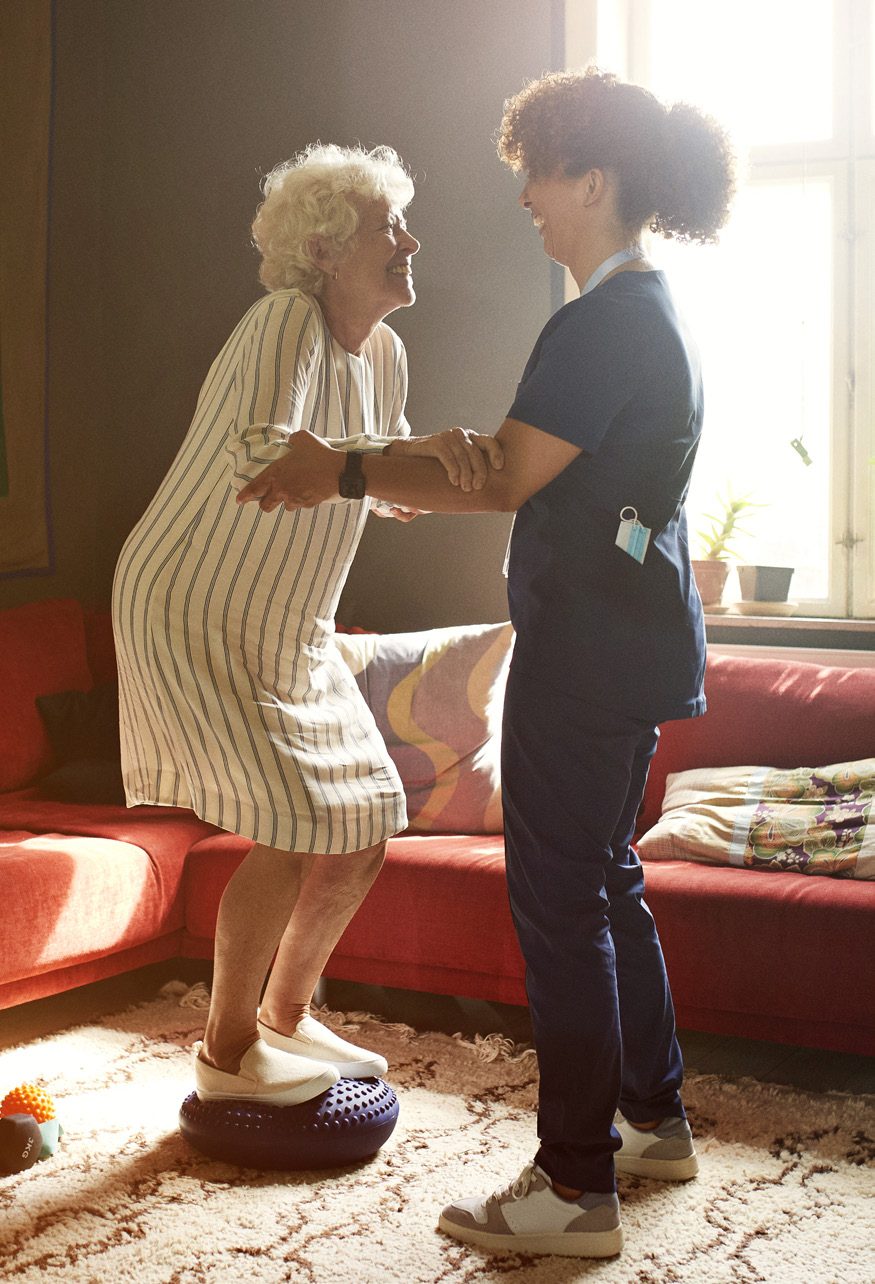




More people in Britain receive care at home than live in care homes, with nearly 639,000 people receiving home care compared with around 441,000 people living in residential care. Yet because home care is usually provided to one person in their own home, much of it takes place out of sight, making it harder for families and care seekers to understand what good care looks like and what to expect from a provider.

Staying at home brings real benefits: familiar surroundings, more independence and care that fits around a person’s daily life. However, home care is also harder to judge from the outside. A family looking at care homes can visit and get a feel for the setting before they commit. Home care offers no equivalent. Home care is delivered in the comfort of people’s own homes, often through short visits, meaning much of the care and support provided goes unseen by the wider public.
For this reason, reviews can be even more valuable for care seekers looking for home care, especially for families arranging care for the first time. Across the sector, reviews also help build the visibility that home care has sometimes struggled to achieve. They also give a voice to the people receiving care at home. In this report, over a quarter (28%) of reviews were written by people receiving home care – seven times the proportion of care home reviews written by residents.
For providers, verified reviews show the day-to-day reality of care at home. They reveal what families notice and value, and point to the areas that may need more attention. For carers themselves, reviews can offer valuable recognition. As they often work and travel alone between clients, they rarely have colleagues around to see the difference they make. A review that names a carer, or thanks them for their patience and kindness, shows them that their work is noticed.
Following our previous Caring Britain report on care home reviews, this edition sets home care and residential care side by side for the first time. Overall, the findings are positive. Home care providers achieve an average review rating of 4.76 out of 5, and people receiving care rate being treated with dignity more highly than any other part of their care. “Carers” is the word that appears most often in positive reviews, which mirrors the central place staff hold in home care reviews.
Other findings give more cause for reflection. Value for money is the lowest rated area, as it is in care homes. In England, 38% of home care providers have no current Care Quality Commission (CQC) rating, and 57% of providers have no homecare.co.uk reviews at all. Many families therefore choose care with limited information to guide them.
We are calling on every home care provider to encourage their clients and families to leave reviews. Each review helps a family searching for care, and each one shows providers what they do well and where they can improve.
The report also looks at how families search for care, as AI tools play a growing role in how people find and compare providers. A strong, verified review profile will matter more as a result.
Trust in home care starts with the care people receive, and with the confidence families can place in what they read about it. That is why homecare.co.uk believes families deserve a full and honest picture of home care, not a partial one.
Choosing a home care provider means placing a great deal of trust in someone. You are inviting a carer into your home, often at a time when you or someone you love is vulnerable, and trusting them to provide personal and sometimes intimate care with dignity, kindness and respect.
Most families come to home care with little to go on, and many are arranging it for the first time. Home care is often the first formal care a person receives. Many people start with support at home and only move into a care home later, when their needs increase.
Reviews can help to fill this gap. In polling of people looking for home care, 80% said reviews on homecare.co.uk were extremely or very important to their decision. For care homes, the equivalent figure was 76%.
How important were reviews on homecare.co.uk
(sample of 396 care seekers)
Reviews do not replace regulation or a conversation with a provider. What they offer is a first-hand account of care from the people who receive it and their loved ones. They show whether carers arrive when expected and take time to talk, and whether the same familiar face returns each week. Families want to know these details before they commit to care, and they rarely find them in a brochure or a regulatory rating.
Reviews also play an important role for home care providers, helping them demonstrate the quality of their services and build trust with prospective clients. This can be particularly valuable for providers expanding into new areas where they have yet to establish a local reputation.
“When you enter a new area as a growing care provider, earning the trust of local families is everything. At CareYourWay, reviews have become one of the most powerful ways we do that.
“We hear ‘we saw your reviews’ remarkably often when families first enquire. While we generate feedback across multiple platforms, homecare.co.uk is consistently the one families mention when they have researched us and independently verified the quality of our care. We have even had families tell us that, after reading our reviews, they simply did not want to speak to another provider.
“That reputation has to be earned. Our teams deliver exceptional care every day, and homecare.co.uk gives the experiences of those we support a trusted, independent platform to tell that story. Our franchise partners see enormous value in that locally, particularly when establishing themselves in a new community. Having been recognised as a Top 20 Home Care Group for four consecutive years, we have seen first-hand how that credibility helps build trust, generate high-quality enquiries and accelerate local growth.
“As the way families find care continues to evolve, including through AI-assisted search, having a strong and credible digital reputation will only become more important.
“For us, homecare.co.uk is one of the most valuable tools in our toolkit. It gives the quality of our care an independent voice and gives families confidence in CareYourWay before they have even picked up the phone.”
For families, home care is often arranged following a sudden change in a loved one’s health or circumstances. Reviews can provide reassurance at a difficult time, helping people make more confident decisions by learning from the experiences of others.
“When a family starts looking for home care, it is often because something has changed quickly. They may be worried about a parent or loved one, and trying to make the right decision at what can be a very emotional time.
“We know that many families begin their search online, and reviews on trusted sites such as Homecare.co.uk are today’s equivalent of word of mouth. They can feel like a recommendation from someone who has been in their shoes, giving people an honest sense of what home care is really like. Alongside a conversation with one of our local teams, they can offer real reassurance when families are deciding what is right for them.
“For us, every review means something. Our carers, branch and support centre teams care deeply about helping people live well in the homes and communities they love, so it is incredibly special when a family takes the time to share their experience.
The data in this report is drawn from verified reviews published on homecare.co.uk between September 2025 and August 2026. Where a data set covers a different or shorter period, this is noted alongside the relevant figures.
homecare.co.uk is the UK’s top home care reviews website which helps people find home care for themselves or someone they love, bringing together provider information, guidance and reviews in one place.
Four in five people looking for home care said reviews on homecare.co.uk were extremely or very important when choosing a provider.
57% of home care providers have no homecare.co.uk reviews, creating a significant information gap for people comparing care.
4,552 providers analysed had no regulator rating, meaning some families may have limited information available when making a choice.
28% of home care reviews are written by clients themselves, compared with just 4% of care home reviews written by residents.
Being treated with dignity is the highest-rated aspect of home care at 4.83 out of 5, ahead of care and support and staff.
Two-thirds (66%) of home care reviews are now submitted online rather than on paper cards, up from just half (50%) in 2021.
95% of providers appearing among the top three providers in the AI searches analysed had reviews on homecare.co.uk.
The strongest message in our review data is the importance of the relationship between carer and the person receiving care. Being treated with dignity is the highest rated category, at 4.83 out of 5. Dignity carries particular weight when care takes place in someone’s own home. Carers often help with personal tasks such as washing and dressing, in a space that is deeply familiar to the client. How a carer acts in that setting shapes whether someone feels respected in their own home.
Care and support (4.79) and staff (4.78) follow closely behind. This is a subtly different picture to care homes, where staff receive the highest rating of any category. In home care, dignity, personal support and staff quality all sit within a few hundredths of a point of one another, suggesting families more often judge the care they receive and the person who provides it as part of one holistic experience.
The language used in positive reviews reinforces this picture. “Carers” is the most frequently used positive term in homecare.co.uk reviews, followed closely by “service”, “good” and “care”. Words describing the manner of carers, such as “helpful”, “happy”, “excellent”, “friendly”, “caring”, and “kind”, also feature prominently. Some words point to what sets home care apart from residential care. The use of the words “punctual” and “reliable” reflects the rhythm of home care.
In a care home, staff are always nearby. In home care, a client waits for a carer to arrive, and families often plan their own day around those visits.
A late or missed visit can unsettle both, which helps explain why reliability features so strongly in how people judge their care.
“Polite” is another word that stands out in home care reviews, but does not appear among the most common words in care home reviews. The difference lies in the fact that a care home is a shared space where staff and residents spend the day together, while a home care worker is a visitor in someone’s private home. Courtesy matters in this setting, and reviews show that clients and families value carers who treat their home, and their routines, with respect.
As with care homes, value for money is the lowest rated category, at 4.65. This is likely to reflect pressures felt across the whole social care sector. Home care providers are facing rising operational and staffing costs, while families are faced with a significant financial commitment. Home care also makes cost unusually visible. Families often pay by the hour, and they can see exactly how this time is spent. While care home fees cover accommodation, meals, activities and round-the-clock support, home care fees typically cover a set amount of a carer’s time. When a visit feels rushed, clients and families can notice this directly. Clear communication about fees, visit lengths and what each visit includes can help families understand what they are paying for and feel confident in the value of their care.
Review scores for home care also differ by ownership. Both private and not-for-profit providers achieved strong average ratings, with the former having only a slight edge over the latter. Whereas private providers have an average review rating of 4.82 out of 5, not-for-profit providers sit at 4.77. This is very different to care homes, where not-for-profit providers receive higher ratings.
Review scores are rated out of 5.